
With almost 20 years in HR, I have had countless discussions about pay transparency. The digital economy is rising. Employee sensitivity is growing. His question becomes more natural year after year. Unfortunately, what I still see is that even larger companies claim to have transparent policies. However, they still hide what they give their employees. They also include confidentiality clauses in employees’ contracts.
In the period 2023-2025, with help of colleagues psychologists from different countries, I arranged a survey on how companies respond to requests for pay transparency. To make it happen I relied on the help of fellow psychologists from six countries.
What we found was at once disturbing and intriguing. You will see some of the findings in the charts below. The research covered people in leadership roles across six countries in Eastern and Central Europe. Fellow researchers and psychologists completed it. They interviewed 962 leaders across 12 industries and more than 200 companies. 46% of companies were international (operating in at least 3 countries), and 54% were local. From that large number of respondents, the research community identified 4 different patterns.
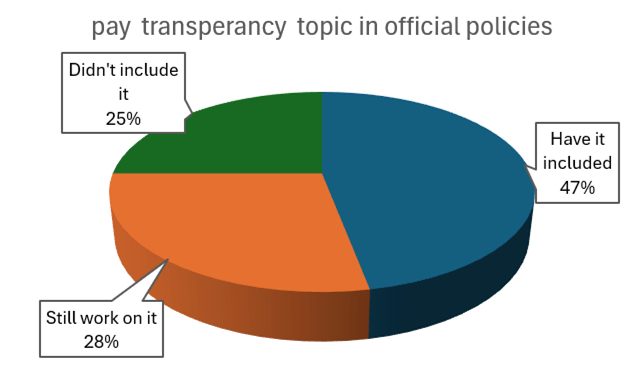
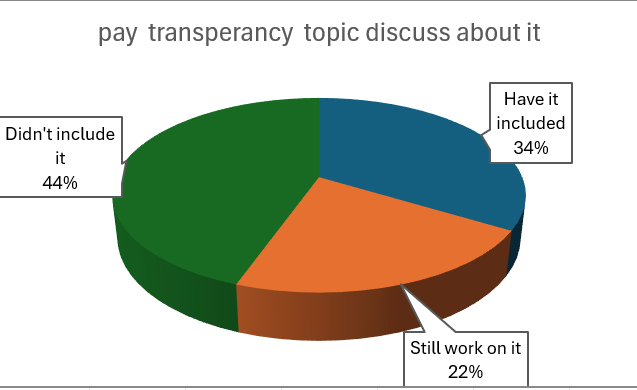
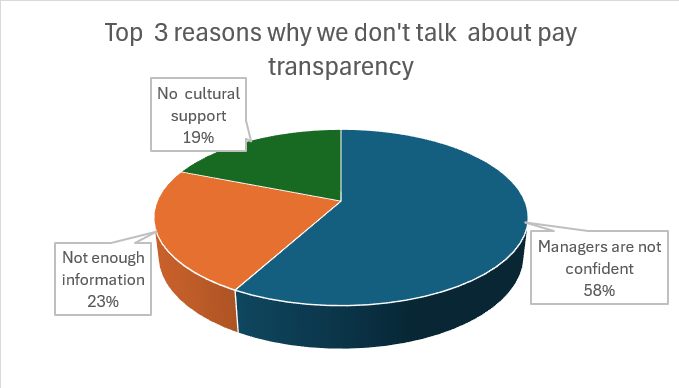
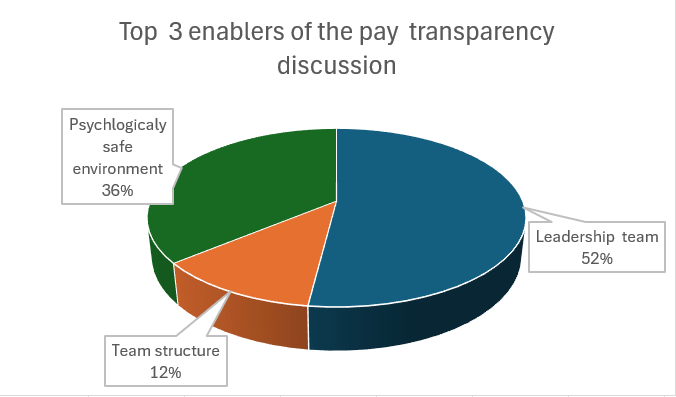
Were you surprised by what you saw? Or maybe it was confirming what you already know and experienced?
In both cases, these results show that HR and Leadership teams still have a lot of work to do.
Here I will focus on one of the areas we identified. It is all connected to the company’s leaders. Why them? The effort HR makes is significant. Nonetheless, the communication funnel for pay transparency does not go directly from HR to employees. The logic of the pay system does not either. Instead, they reach employees through conversations with the leaders in their company, function, or department. HR often supports communication. Ultimately, leaders decide what and how to communicate. They must keep the team’s engagement at an appropriate level.
Here are some of the main disruptors of how pay transparency is communicated within the company. Additionally, here is what a leader can do to increase the positive impact of communicating pay with their subordinates.
The significant company’s fear of exposure and demand for answers
Companies are well-structured mechanisms, and most of the information is controlled in a specific way. Opening the topic of pay transparency disrupts the framework. It raises questions about pay levels and the structure of pay. It also questions why pay is structured the way it is. Furthermore, it questions why similar or the same roles have different pay. So many questions, and each of them makes the company feel uncomfortable. Trying to keep the inequities in secret doesn’t help the non-comfort level. It creates more discomfort. It can reach the point of denial where every explanation is accepted.
Poor data support
Gone are the days when payment was determined based on what “the employee deserves”. In those days, managers and leaders had poor or no data. They were trying to explain salary changes to employees. The employees didn’t accept the changes and quietly resisted them. Today, data is everywhere. Many companies give salary data. Many offer pay models, even broken down by industry and level of skill. Leaders and HR may first need to gather that information to open the door for pay equity discussions. They should implement it in the company structure. This will help create a model that supports discussion instead of eroding it.
Discrepancy on a leadership level
At first glance, leadership teams talk about pay transparency a lot and understand it well. On the other hand, the execution is very rough. Everyone sees an opportunity to boost engagement. Managers and leaders see uncomfortable questions. Finance departments expect a possible increase in OPEX. HR struggles to find the balance. They work to convince others to trust the process. Ultimately, legal departments face the possibility of compliance issues. At the end, the functions blame HR for not providing adequate support. They also blame HR for disrupting the environment during the process.
Struggle with fear of experiencing a competitive disadvantage in the market.
For many years, organizations kept salaries and benefits confidential. This was an “advantage” they used to attract and keep candidates. And that led to a comic situation where social benefits were widely communicated, but the salary remained a secret. It is like saying the new house has large windows, but not sharing the materials used to build it. And somehow, this was seen as usual for organizations and their leadership teams. But with the shift of generations in the workplace, transparency and open communication become stronger elements in the whole communication. What was hidden from candidates and competitors somehow turned from an “advantage” into a “disadvantage.” Organizations that still support the old way of thinking and acting should understand this. The fear of sharing no longer helps.
Unprepared and insecure leaders and managers
The salary and pay transparency as a whole drains organizational energy. The leadership team often stands in front of the people. They declare what they will do to help it happen. They act as if they are scared. This is not usually caused by a real fear. Instead, it is due to playing around with different scenarios of what could happen if people start asking. People want to be seen as the stars in the room. With that in mind, leaders and managers want to have “answers to all possible questions”. They fear they might come out unprepared or embarrassed. This fear makes them stop the communication process. They turn to others more conservatively. From the employees’ perspective, management seems to hide information. They are not building an environment of transparency and fairness. Starting from this understanding, many organizations halt the process. They wait until leadership and managerial teams are ready to explain pay transparency.
The culture in the organization
Now, the last, but not least important element is the culture. What seems possible and easy in an open and collaborative culture may be seen as restrictive. It can also be viewed as disgraceful in a more conservative environment. Said another way, how organizations build their culture directly affects people’s understanding and acceptance of fairness, transparency, and openness. Employees see fairness as transparency, but fairness is defined by the clarity of information they get from the employer.
GETTING TO WHAT WORKS
No surprise that people need more attention these days. With the rise of the information society, the more details people collect, the higher their level of individual satisfaction becomes. These areas still need significant attention. This ensures that the organization relies on the right people with the right attitude in the long term. Working with these areas will require organizational leadership teams to focus on specific actions.
The General fear in the organization
That area needs special attention. Turning negative expectations into positive outcomes starts with leadership teams. They need to realize that what appears to be fear can be seen as an opportunity. The effort here must be focused on examining each specific element causing fear. It’s important to understand its logic and structure. Reform it into a positive outcome.
The lack of data
Solving this issue often requires more data. When the organization uses more trusted and reliable sources of information, the quality of the analysis’s output will be higher. Choosing wisely which set of information to use is a crucial element of the decision-making process as a whole.
Leadership level discrepancies
The one element that doesn’t get solved so easily. Leaders often talk about transparency. Still, at the end of the day, everyone has their own priorities, without supporting what was already declared. The issue here erodes trust. Before starting a conversation about transparency, the communicator should make sure all leaders are on the same page. The message should be consistent. This should be a priority for everyone involved in the process. They should stand behind it with their name, title, and personality.
Disadvantage from competitors
The fear that comes with this set of thoughts is, to a large extent, an individual perception. To solve the case here, the leadership team needs to accept that sharing information is beneficial. It helps the company position itself in the minds and hearts of the people. Sharing information doesn’t mean oversharing every single detail. Still, having enough information visible for others in the public space doesn’t weaken the company. It helps build trust and understanding among those interested in working with it. And YES, that means that leaders need to change their mindset and that the change is uncomfortable. Only by living with this change in mind can the stigma in communication be overcome. Understanding how it positively impacts the company’s image is essential for winning the transparency communication agenda.
The unprepared and insecure leaders and managers
This one’s fix sounds easy – train them. And at the same time, it feels so hard to execute. The sad truth is that most companies overlook this and invest in structured training. Helping communicators gain confidence and move away from insecurity is a long and consistent process. It requires support and clear steps. Providing enough content is essential to build trust and security in how things are communicated. Often affected by fear, people need to build confidence when communicating about pay transparency. Organizations need to provide support. They also need to create a psychologically safe environment. People should feel safe to make mistakes and learn from them.
And that is all…Or maybe not?
Did we forget something? Was anything already mentioned but not presented here?
…Ah, that last element of the culture…
Do we need to change and reshape the culture?
The simple answer is YES. But reshaping the culture is not something you do separately. The culture exists in a specific context. Changing the context and making brave decisions reshape the culture.
FINAL WORDS:
Pay transparency has been a hot topic for many years. With different shifts, companies and employees have invested enormous time. They have also invested other resources to rebuild an understanding of what it really means. The world is changing, and old beliefs are undermined. In this context, focusing on transparency and directness is crucial. A willingness to listen, understand, and act supports greater transparency and stronger trust.
 The Human place - a path from you to yourself